
When Elizabeth Zlotowitz retired from her career as an entertainment industry paralegal and settled into her Westchester home 15 years ago, she found herself facing a challenge familiar to many retirees: How do you keep your mind engaged while building a new social life?
The answer came from an unexpected place: A computer solitaire game.
“I started playing a solitaire game that used Mah Jongg tiles,” Elizabeth says. “It had nothing to do with the actual game, and it made me curious. I thought, ‘What are these things?’”
That curiosity led her to take her first Mah Jongg lesson.
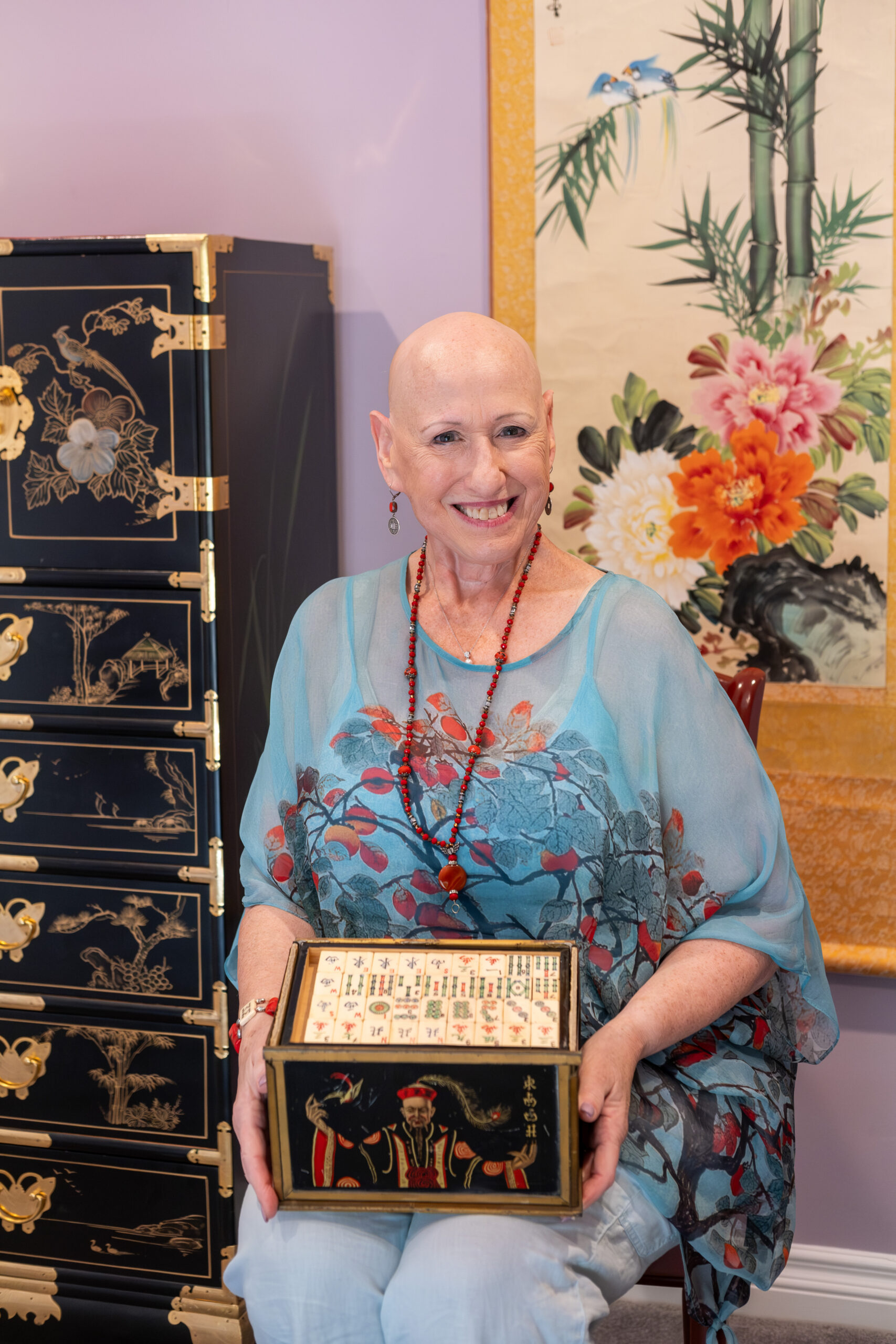
Fifteen years later, it has grown into a thriving second career teaching American Mah Jongg to neighbors across Westchester, Playa del Rey, Playa Vista, Culver City and beyond through her business, Mah Jongg Made EZ.
Today, she’s taught more than 150 students, helping transform what many people think of as their grandmother’s pastime into a modern social activity that attracts everyone from young parents to business professionals.
History of the game
Although Mah Jongg originated in China, the American version of the game developed a unique identity after becoming especially popular among Jewish women on the East Coast in the early 20th century.
“For a long time, it was called Jewish Mah Jongg,” Elizabeth says.
But for a while now it’s been called American Mah Jongg because it appeals to everyone. She notes that while both American and Chinese Mah Jongg use the same tiles, they’re played with different rules.
“Think of it as a deck of cards. Whether you’re playing bridge, poker or Old Maid, it’s still the same deck of cards, just different games,” she says.
More than winning
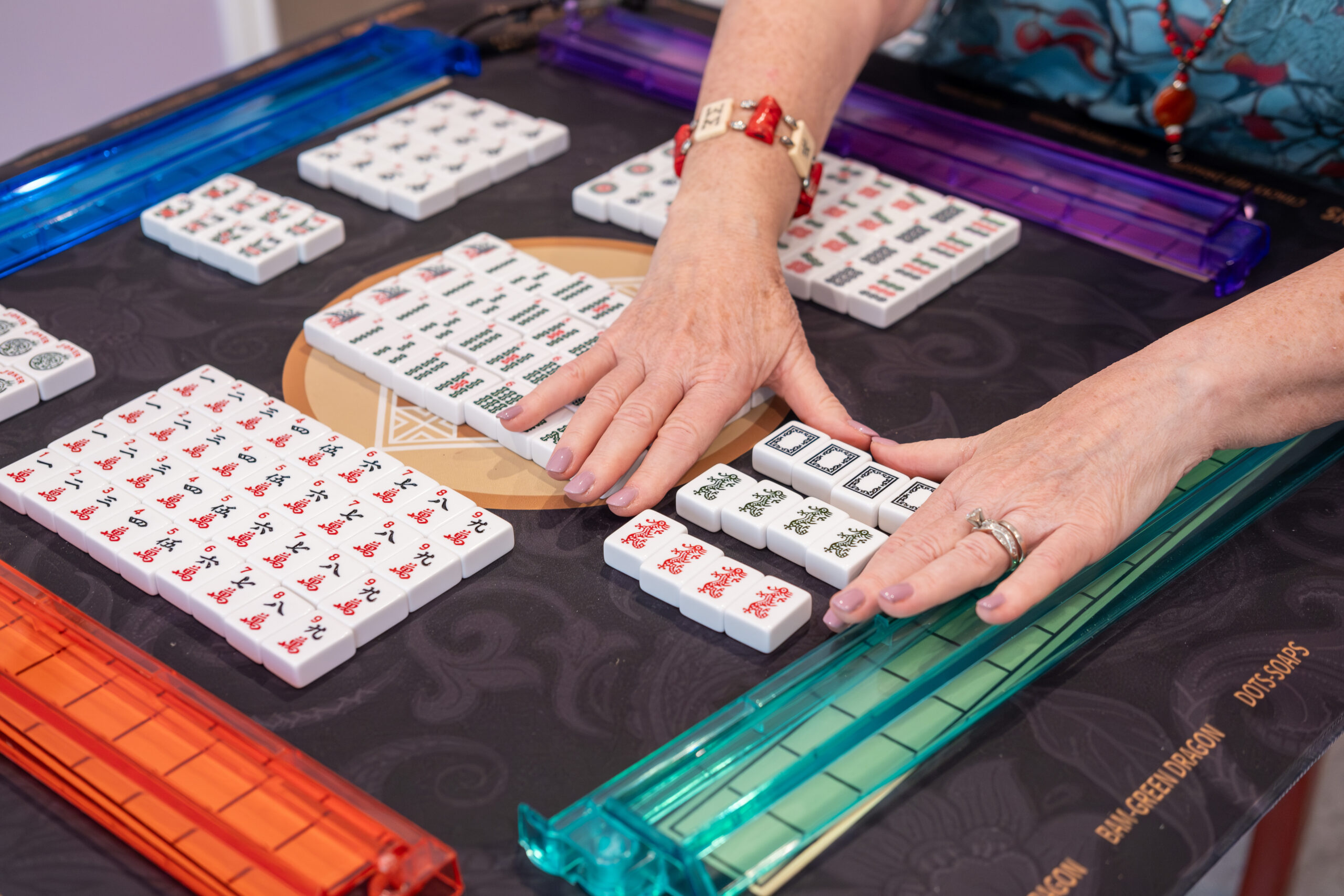
To the uninitiated, Mah Jongg can appear intimidating. Played with colorful tiles instead of cards, the four-player game challenges participants to build a winning hand by collecting matching sets of tiles and being the first player to arrange them in a very specific order. While the rules are straightforward, mastering the strategy takes time.
“It’s a simple game, but not easy. Think of chess – the objective is simple, but getting there, not so much,” Elizabeth says.
That challenge is exactly what appealed to her after retirement.
“I didn’t want my brain to go mushy,” she says with a laugh. “I wanted to keep using my mind but not take on responsibilities like I had when I was working full-time.”
But she soon discovered the game’s greatest reward wasn’t the competition.
“It’s the community,” she says. “You need four people to play, so right away you’re meeting and engaging with people.”
For more than a decade, she met weekly, usually with the same group of women. While they certainly played Mah Jongg, the conversations between games became just as valuable. They discussed children and grandchildren, recommended their favorite TV shows, offered advice through life’s challenges and celebrated one another’s successes.
“It’s cheaper than therapy,” Elizabeth jokes.
Teaching Community, not just Mah Jongg
Eventually, friends began asking her to teach them. Then those friends invited their own friends. Before long, Elizabeth found her own niche in the game she adored.
“As much as I enjoy playing Mah Jongg, I really love teaching Mah Jongg,” she says. “I love introducing people to one another and building community.”
Unlike many instructors who offer private lessons, Elizabeth intentionally teaches just four students at a time.
“You need three other people to play. How are you going to meet them?”
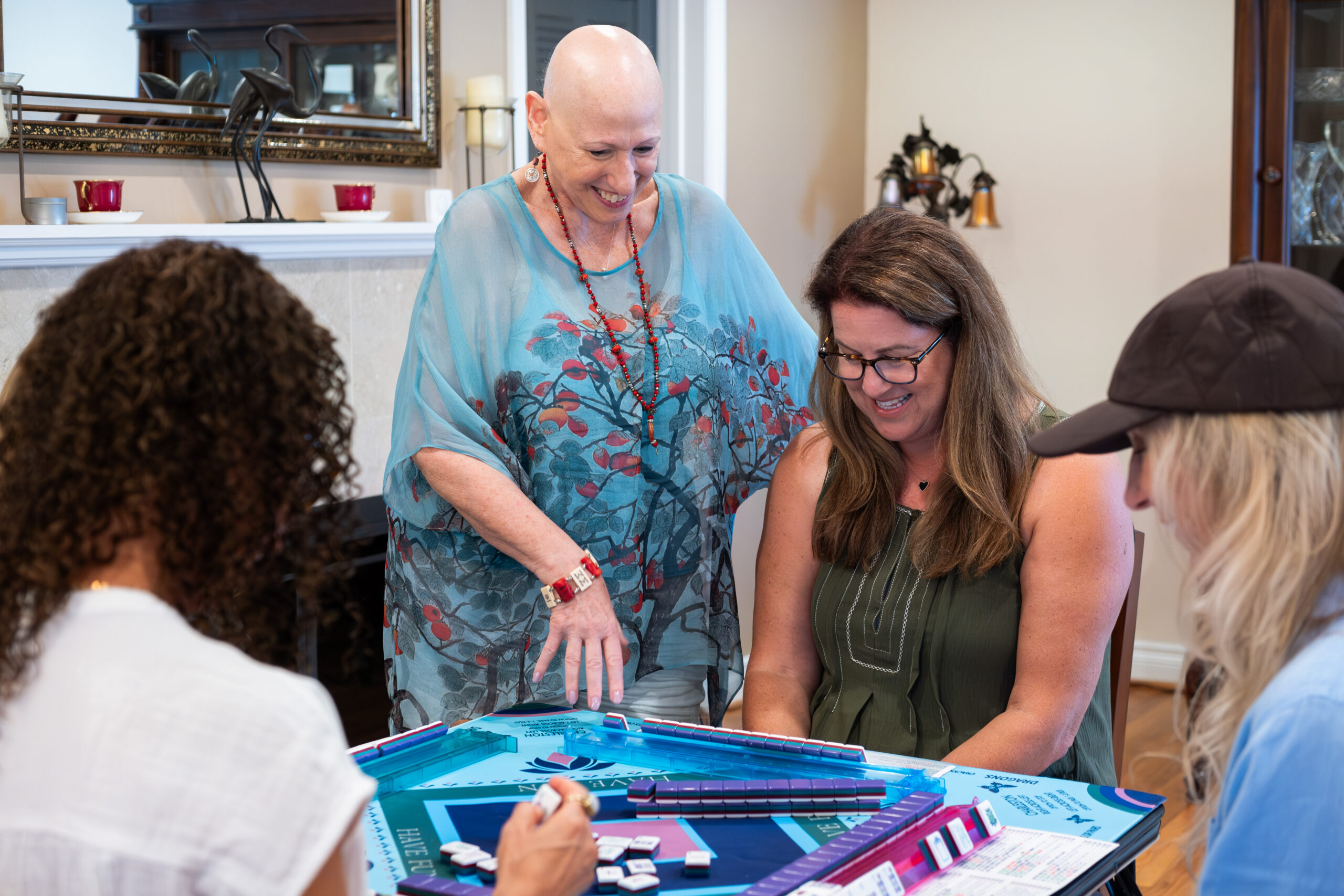
Each class becomes an instant playing group. Over four weekly two-hour sessions, students not only learn the game but also develop friendships with one another. When the course ends, they have a built-in group with whom to continue playing.
To help those connections continue, Elizabeth maintains a Google document where former students can voluntarily list their contact information and neighborhoods, making it easy to organize games or find substitute players.
“I don’t want them to be reliant on me for their Mah Jongg career,” she says. “I want to give them the tools, and then they can go out and conquer the world.”
Getting to know the tiles
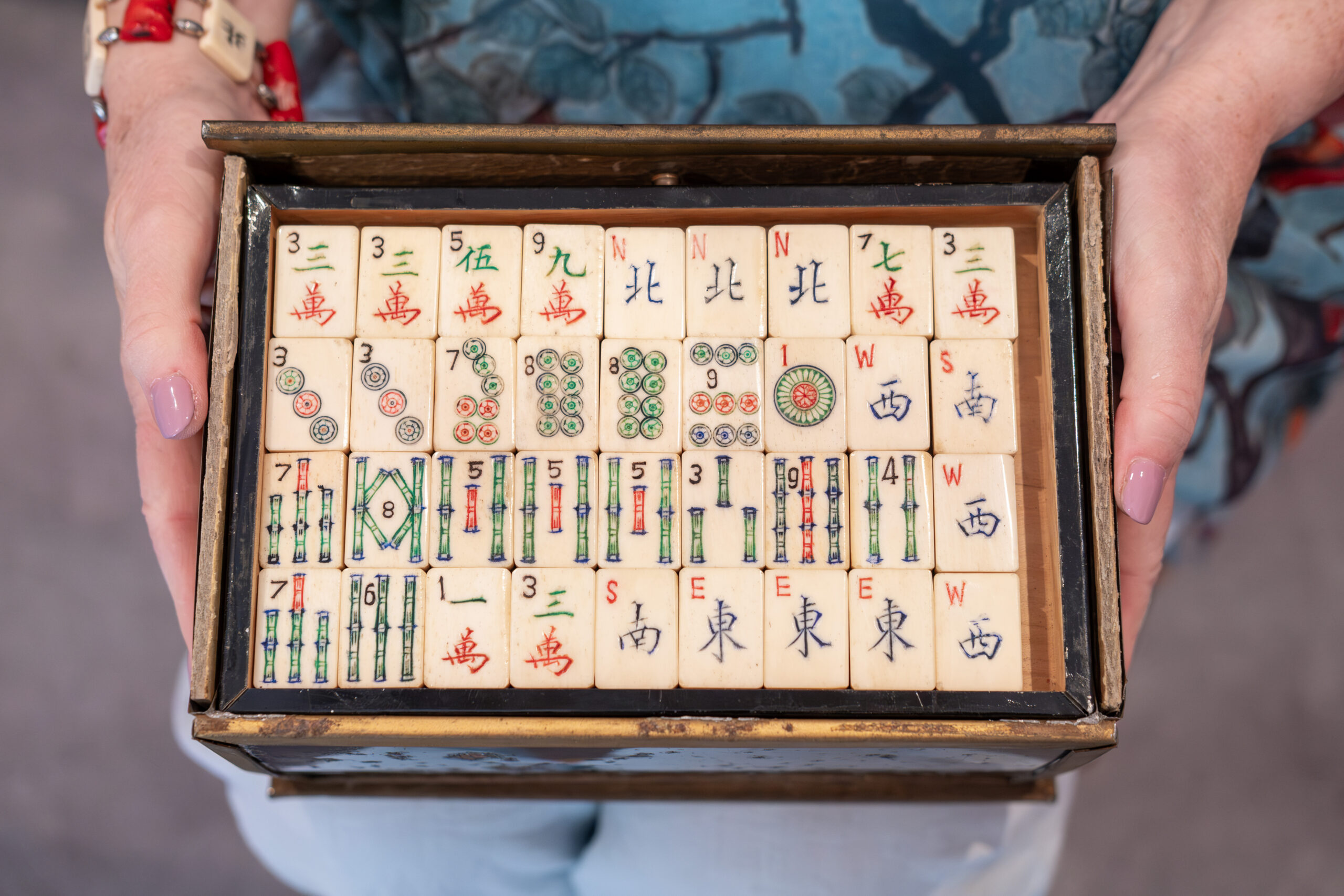
On a sunny day in Westchester, I observed one of Elizabeth’s classes that took place in her living room on a traditional card table. For the participants, Naomi Waka, Megan McEwen, and Adrienne Jacks, it was their fourth and final class. A former student, Regina Freidin, filled in as the fourth player. As a reward, Elizabeth asked them to choose which set of tiles they wanted to play with. They chose her gorgeous vintage set made from bone and bamboo in the 1920s.
Because the pictures and Mandarin writing on the tiles vary from set to set, Elizabeth went through each tile with her students to make sure they understood which was which.
Every set has a joker, or wild card, just like in a traditional deck of cards. This particular joker tile had a beautiful picture of a Geisha girl. Surprising, since the game is Chinese. Also interesting, the tile that represents the white dragon is just a plain white tile with no writing or pictures.
“The women of the 1950s thought this white dragon looked like a bar of Ivory soap, and the tile has been called soap ever since!” says Elizabeth.
When the students are asked why they enjoy Elizabeth’s classes, they all agree that she’s both patient and fun.
“She breaks it down in very understandable terms, and we really understand the goal of each lesson. She was very clear and methodical in her teaching,” says Regina.
“She also keeps it fun,” says Megan, adding, “Elizabeth has great stories and explanations behind the tiles.”
A New Generation Discovers Mah Jongg
For decades, American Mah Jongg carried a reputation as an activity reserved for older women. Elizabeth says that’s changing rapidly.
Many of her newest students are younger mothers from neighborhoods like Playa Vista and Mar Vista who drop their children off at school before attending morning lessons. She’s also seeing more couples sign up together.
“It’s a great date night activity,” she says. “Especially in this economy.”
Even the men are joining in. Her husband belongs to a monthly men’s Mah Jongg group that has completely replaced their traditional poker night.
“And the men admitting that they like it, that’s been really fun,” she says. “It breaks stereotypes.”
She believes the game’s growing popularity comes from offering something people increasingly crave: genuine face-to-face interaction.
In an era dominated by smartphones and social media, Mah Jongg requires four people to sit around a table, talk, laugh, think strategically and spend uninterrupted time together.
A game for every age
Elizabeth sees even greater possibilities for the future. She hopes to expand beyond lessons in her living room into schools, community organizations and corporate settings.
“I think it would be a great after-school program,” she says. “Perfect for teenagers.”
She also recently began exploring opportunities to use the game as a corporate strategy-building exercise. Because every player must constantly analyze changing information while adapting to the moves of others, she believes Mah Jongg naturally develops planning, critical thinking and decision-making skills.
More than just a hobby
Perhaps the most meaningful moment of Elizabeth’s teaching career came recently when she worked with a woman recovering from a stroke. The student worried that cognitive challenges might prevent her from learning. So Elizabeth adjusted the pace.
“I had to repeat some stuff, but I didn’t mind repeating it,” she says. “It worked beautifully; she did great!”
After completing the course, the woman sent a heartfelt message thanking her for the patience and encouragement that made success possible.
“I’m just so touched that it was such a positive experience for her,” Elizabeth says.
A local community resource
For Westchester residents interested in giving the game a try, there are several ways to get started. Elizabeth teaches small-group classes through her cottage business Mah Jongg Made EZ, making the game approachable for complete beginners. She also encourages graduates to continue practicing at the Westchester Senior Center, where Mah Jongg players gather on Thursdays from 2 to 4 p.m., creating another welcoming place for newcomers to sharpen their skills and meet fellow players.
Looking back, Elizabeth never imagined that a simple online solitaire game would lead to a second career.
What began as a way to keep her own mind active has evolved into something much bigger, a growing network of neighbors connected by colorful tiles, friendly competition and meaningful conversation.
“I’ve met so many wonderful people whose path I wouldn’t have ordinarily crossed,” she says.
For a game that has been around for generations, this may be Mah Jongg’s greatest move of all.
Story by Shanee Edwards. Photos by Ellie Taylor.